Showing posts with label Monsterthon. Show all posts
Friday, October 31, 2014
Halloween Monsterthon, For Your Ears Only Edition: The War of the Worlds
Since the Monsterthon has unintentionally taken on a very alien character, it’s appropriate to use the holiday to commemorate the Halloween edition of the first alien invasion story of all time. The Mercury Theatre On The Air’s broadcast of The War of the Worlds is a thing of legend, a radio play that allegedly spooked an entire nation with its documentary realism. The furor over it helped catapult Orson Welles into the national spotlight and resulted in a lot of rules preventing radio and TV from ever being too convincing in the future. But setting all that aside, it’s just a damn good audio play, one of the great works of the medium.
Thursday, October 30, 2014
Halloween Monsterthon: Goke, Body Snatcher From Hell
Science fiction in the sixties couldn’t help but focus on the social turmoil erupting across the world, and Japanese sci-fi filmmakers did their part. While Matango tackled social conformity, Goke, Body Snatcher From Hell is about disintegration. Born of the chaos of wars, assassinations, and political corruption, it’s a surreal parable that makes up for in intensity what it lacks in coherence.
Monday, October 27, 2014
Halloween Monsterthon: Robot Monster
Often ranked among the great bad movies, Robot Monster certainly merits the kind of bizarre attention and appreciation that’s been extended to Ed Wood’s filmography. Again we have a movie whose ambitions vastly outstrip both the filmmakers’ resources and technical skill, but which marches on regardless. It is not what one would traditionally call good, but its originality and charm- as well as the fact that it runs barely over an hour- makes it damned entertaining.
Thursday, October 31, 2013
Mini-Monsterthon: Hellraiser III: Hell on Earth
I normally try to close out these marathons with something really good, but that's not entirely necessary. Even bad movies have their appeal, and though Hellraiser III: Hell on Earth is pretty much the precise point where the franchise jumped the tracks and started to speed downhill, it ends up doing so with a certain idiotic panache. To its credit it does actually build from some of the story developments of Hellbound: Hellraiser II, but it blows its potential with a dull buildup followed by a ridiculous payoff.
Mini-Monsterthon: Child's Play
Chucky is an anomaly among movie slashers, and not just because he's battery operated. The killer doll with a foul mouth came in at the tail end of the 80s slasher craze, and the original Child's Play doesn't follow most of the familiar clichés of the genre. Instead of taking a small group of gullible people, throwing them in an enclosed space and killing them one at a time, Child's Play actually tells a fairly ambitious story mixing the supernatural and psychological, and putting a lot of effort and effects money towards selling the illusion of an evil My Buddy toy. It's fairly restrained and reasonably slick, and if it backs away from exploring the satiric possibilities of its premise, it manages to spin a good yarn anyway.
Tuesday, October 29, 2013
Mini-Monsterthon: Night of the Creeps
Blending comedy and horror is something filmmakers have done a lot, but it's always fraught with peril. Unless you're outright spoofing the genre, you have to balance the tone and make sure the audience doesn't get whiplash, and too often a horror comedy (or comedic horror film, or whatever) will turn into a bland mush without the courage of either conviction. Night of the Creeps stays on the lighter side of the equation for about 90% of the time, throws in just enough drama to keep things interesting, and the resulting mixture is fairly pleasant. There are a few amateur touches and some problems with the story, but it's definitely one of the good B-movies.
A strange canister is ejected from an alien spacecraft and lands on Earth in 1959, disgorging a worm creature that burrows itself into the head of a local college student. Local scientists put the student on ice, until years later, when freshmen Chris (Jason Lively) and J.C. (Steve Marshall) accidentally thaw him out when trying to pull a prank to get into the college's most exclusive fraternity, so that the former can get closer to sorority dreamgirl Cynthia Cronenberg (Jill Whitlow.) The unfrozen student, now a host for alien brain worms, soon dies explosively and releases many of the sluglike creatures, which hide around campus and slowly start infecting people, just in time for the big dance.
This is a very silly film, which is established when the first scenes of the films show babylike aliens shooting rayguns at each other in a half-scale corridor. The 50s sequences are shot mostly in black and white, there are references to that immortal alien-undead classic Plan Nine from Outer Space, and Cynthia Cronenberg isn't the only character named after a prominent genre director. J.C., a nice amiable paraplegic, provides some gentle comic relief, and the Beta fraternity is straight out of Animal House (or one of its many ripoffs.) By 1986, the initial wave of slasher films had played itself out, and there was a move towards different, more inventive kinds of horror, including the comical. Night of the Creeps checks off a few of the required cliches, including gratuitous sex and violence, but doesn't overdose on either- there's a certain comic restraint that makes it agreeable.
The film isn't entirely a comedy, and its detours into more serious horror have mixed results. There's a lengthy subplot involving Tom Atkins as a detective obsessed with a serial killer who axed his estranged girlfriend on that fateful night in 1959, and it's never clear how seriously we're supposed to take all this, and though it's relevant to the overall story it feels like a subplot that's been grafted on. More successful is a scene involving one character's enslavement by the creatures and their strange, heartfelt goodbye as the alien mind takes over.
The best moments of the film are when it's focusing on delivering full creature feature mayhem in all its implausibility. It's never really scary, but it's lively and inventive, with one sequence in particular anticipating Peter Jackson's Brain Dead. The climax revolves around an attack on the sorority house by zombified fraternity brothers, which leads to the classic line, "The good news is, your dates are here. The bad news is, they're dead." It's that kind of movie.
Night of the Creeps isn't the most memorable of horror comedies but it's successful at negotiating the balance between the two genres, and that's a rare accomplishment in and of itself. It's got a solid if occasionally oddly constructed story, some interesting visuals, and an overall good-natured vibe that makes one inclined to forgive its shortcomings. It's a solid addition to any seasonal horror marathon, warts and all.
Written and Directed by Fred Dekker
Grade: B
Wednesday, October 31, 2012
Monsterthon 2012: Werewolf of London
Though werewolf legends are old, the movies are really are primary source for them- the werewolf equivalent of Dracula has yet to be written and most of the lore comes to us via 1941's The Wolf Man. But before Curt Siodmak and Lon Chaney, Jr. laid down the law, there was another werewolf epic from Universal, and possibly the first movie of its kind. Werewolf of London, apart from being the inspiration for a Warren Zevon song, is an interesting primordial take on an iconic monster; blending science and the supernatural, it captures the fundamentally tragic vibe we're familiar with while having an atmosphere all its own.
Monsterthon 2012: The Ghoul (1933)
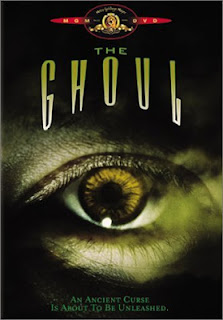
The first big horror movie wave of the 1930s really changed things. Through the silent era, full-blown supernatural horror was rare; it was more common to gather characters in an old dark house and have them killed off by someone masquerading as a supernatural being. Dracula and Frankenstein let actual monsters loose, but didn't wipe out the old way completely, and the UK production The Ghoul is halfway between subgenres. It's mostly built like a mystery thriller, but adds what seems to be a legitimate monster to the mix, and plays differently as a result. Despite a slightly confused approach it's an effective picture with some standout moments, elevated mostly by Boris Karloff's grim presence.
Tuesday, October 30, 2012
Monsterthon 2012: Plan 9 From Outer Space
Ed Wood's Plan 9 From Outer Space would be a tricky film to evaluate even without the iconic status it has attained. Ignored in its initial release, Plan 9 was dubbed "The Worst Movie Of All Time" by Michael and Harry Medved (based on the results of a poll) in the early 80s, but has since come to be regarded as not nearly that bad, but rather one of the Great Bad Movies, so laughable as to be entertaining. That's partly true, but it doesn't fully explain the film's enduring appeal. Many other just as technically inept movies exist, but are too dull or unpleasant to earn such honors. Plan 9 From Outer Space has something unique to it- it's a film that fails on almost every technical level (I say almost because the cinematography isn't bad), but maintains an effervescent energy and a vaguely subversive thrill. Part of it may just be that it's one of the few B sci-fi efforts to deliver what it promises, as ineptly as it does so, and part of it just may be that its crude imagery gets to the core of what we want from movies like this.
Sunday, October 28, 2012
Monsterthon 2012: Little Shop of Horrors: The Director's Cut (1986)
It's hard not to love Little Shop of Horrors. It's plain one of my favorite movie musicals, and it captures so much of what was great about the ascent of genre cinema in the 80s; effects technology and audience tastes had advanced to a point where a musical adaptation of a Roger Corman movie about a man and his talking, man-eating plant was prime source material for a big budget holiday extravaganza. Recently this film has been given a new Blu-Ray release featuring, for the very first time, a restored, darker alternate ending which for a long time was the stuff of legend. This so-called Director's Cut (Frank Oz was not directly involved) works very well in its own right while inviting interesting comparisons to the version seen in theaters, and whichever way you prefer it, it's a great film, vibrant, energetic, and strangely warm and human despite subject matter that's both macabre and outlandish.
(Note that spoilers abound after this point, since the entire difference between both versions of the film is in how they end.)
Friday, October 26, 2012
Monsterthon 2012: Demons
One of these days, I am going to find a tightly plotted Italian horror film. The laws of probability demand it. But it will be a long search, and in the meantime here's Demons, which is The Evil Dead in a movie theater. It stops making sense pretty early on, but it has a lot of energy to make up for it, and at times is almost awesome in its stupidity. That it works at all says there is something to the style-over-substance approach, as much as it may pain me to admit it.
Wednesday, October 24, 2012
Monsterthon 2012: Them!
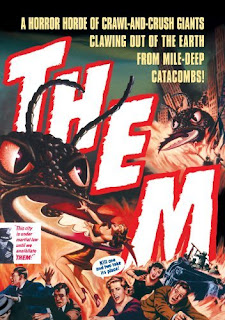
It's hard to imagine a time before giant bug movies; they were a unique product of fifties nuclear paranoia, sure, but there had to be a first impulse, a first writer or producer to suggest that the anxieties of the age were best represented by insects the size of trucks. Them! was the launching point for an entire subgenre and an influence on a number of films afterwards, but it's never quite gotten the acclaim it deserves as a classic thriller. It's tense, atmospheric, and surprisingly smart, introducing an outrageous concept with enough dedication and discipline to make it work.
Monday, October 31, 2011
Monsterthon: Island of Lost Souls
Happy Halloween! To cap this Monsterthon off on an appropriately scary note, we're going old school.
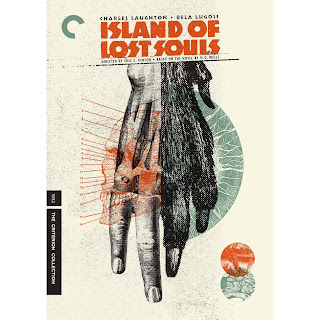
Genre fandom is sort of an incubator for critical appreciation. Metropolis was hailed as a masterpiece by sci-fi fans (including fan guru Forrest J. Ackerman) long before mainstream criticism did so. Island of Lost Souls seems to have taken a similar course; growing up, reading books on horror and sci-fi films, I was led to believe it was a well-regarded classic of the genre, but as late as the seventies, when psychotic killers and demonic possessions were the order of the day, it was considered something vulgar and trashy, and a minor film in comparison to other classics of the era. It's taken decades in the public domain and finally, a Criterion release to move from a cult item to a proper place in the horror canon.
Tuesday, October 25, 2011
Monsterthon: Godzilla vs. Hedorah
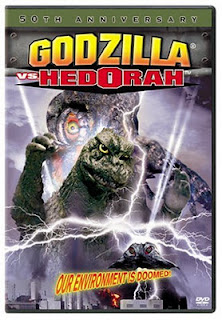
Let's jump ahead to something more horrific. Godzilla vs. Hedorah, once released in the US as Godzilla vs. the Smog Monster, came at a dark time for the Godzilla franchise, with the passing of Eiji Tsubaraya and the general collapse of the Japanese film industry, which had an especially harsh impact on the budgets of kaiju and other effects-driven movies. Intended to kick off a new generation of Godzilla movies, with a new director and new, more kid-friendly attitude, Godzilla vs. Hedorah ended up being a strange, surrealistic experience. It is, frankly, insane, defying any expectation of what a Godzilla movie should be and playing by a set of rules it just made up. There's never been a Godzilla film like it before or since, and the results are goofy, atmospheric, and kinda creepy.
Saturday, October 22, 2011
Monsterthon: Mothra Vs. Godzilla
Godzilla's bout with King Kong was a major box office draw, really giving birth to the Godzilla series proper by showing he was no passing fad. But for his next fight he needed another lofty opponent, and so Toho called up its second-biggest draw to give us Mothra vs. Godzilla. This particular entry is a fan favorite, showing Godzilla at his meanest and most relentless, Mothra at her bravest and most selfless, and still treating the whole affair with some degree of seriousness. Though it's not my favorite of the period, Mothra vs. Godzilla does what it sets out to do and makes us believe without reservation in an epic life-or-death struggle between a radioactive dinosaur and a giant bug.
Monday, October 17, 2011
Monsterthon: Gamera vs. Guiron
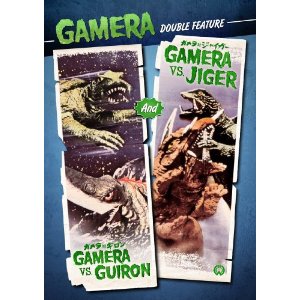
Gamera vs. Guiron is a movie I've seen many times via Mystery Science Theater 3000, so I was looking forward to seeing the full and proper version of it. Surprisingly it's not that different an experience, even in Japanese- the film doesn't seem like it was altered much for American release, and it's short enough that it didn't need to be cut down too much in order to be riffed on. Like the film before it, it's a slight, microbudgeted affair, but seems to wear it a little better. You really have to treat it as a kids' movie, and it appeals to a child's sense of wonder even if it is goofy as all get-out.
Friday, October 07, 2011
Monsterthon 2011: King Kong vs. Godzilla
This October is gonna be another month of monsters, and I'm going to concentrate on our friends the kaiju. They're not often scary, though they are awesome, and I may throw in some traditional horror stuff as time permits.
King Kong vs. Godzilla is a tough film to review because, like the original Godzilla, it exists in two versions, but with a much larger gap in quality between them. What's more, the "proper" version of the movie, the original Japanese release, is going to be inaccessible to most readers of this blog; there is no legal English-language release of it, nor is there likely to be anytime soon owing to complicated legal issues. This is the 21st century, though, so… well, I'll let you do the searching.
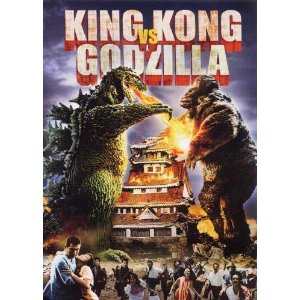
In any case, this is a lot of fun. Godzilla returned after a 7-year hiatus to battle the original icon of giant movie monsters in a big splashy color Tohoscope production to commemorate the studio's thirtieth anniversary, and not only did the filmmakers deliver the spectacle, they packed in a sly, satiric attitude and some jabs at the world of advertising and publicity. While Godzilla's original rampage was deadly serious business, and the follow-up a straightforward sci-fi thriller, King Kong vs. Godzilla shows Ishiro Honda, Eiji Tsubaraya, and company loosening up and having a little fun with their larger-than-life superstars.
Sunday, October 31, 2010
Monsterthon: The Bookshelf: Dracula by Bram Stoker

I’ve made two unsuccessful attempts at reading DRACULA before. Both times I seem to recall enjoying it, but some other assignment or event compelled me to put it aside for long enough that I figured I probably ought to start all over again. This Halloween season I resolved that I would finally make it all the way through this classic of horror literature, and so I can complete Monsterthon by paying tribute to one of monsterdom’s elder statesmen.
The story, told entirely in correspondence and diary entries, begins with Johnathan Harker, a London real estate clerk, heading to Transylvania to finalize some sale documents with the mysterious Count Dracula, who is planning to buy the Carfax estate in England. As days pass, Johnathan works out that the Count is keeping him a prisoner, and that he is more than just an elderly aristocrat. He manages to escape, but in the time it takes him to get back to England, Dracula has already arrived on a ship whose crew were wiped out under mysterious circumstances. The Count sets his sights on Lucy Westenra, a friend of Johnathan’s fiancee Mina, and begins luring her out sleepwalking and feeding on her blood. Lucy’s betrothed Lord Arthur Goldamring, as well as asylum director Dr. Seward and Mina herself, notice a change in Lucy’s condition, and Seward summons his friend Professor Van Helsing, an elderly gentleman with some knowledge of things beyond the realm of known science. Van Helsing is too late to save Lucy from dying, but helps her friends to release her from the curse of vampirism that follows; afterwards, knowing Count Dracula’s intentions, they must protect Mina from becoming another of his brides.
An interesting thing about this book is that Dracula himself is barely in it. He gets a lot of “page time” during the early scenes in Transylvania, but in England he becomes mostly an external force, working through visions and animal guises, as well as through his slave Renfield, a fly-eating madman. Part of the reason for this is that the heroes are careful to avoid directly confronting the Count, who at night is basically too powerful for mortals to face and live. He is powerless during the day (though not actually burned by sunlight as would become the standard), but makes sure to appear rarely during such times. Though Bram Stoker famously based the character in part on Vlad Tepes (aka Vlad the Impaler), the references are more direct in the book than in any adaptation I’ve seen, with the possible exception of Francis Ford Coppola’s film- Van Helsing hypothesizes that Dracula was once a great leader who for whatever reason made a pact with dark magical forces and was turned into a prince of the undead. The physical description of the Count is very much like that of Vlad, and the explicity aristocratic background blurs and offsets some of the anti-Semitic origins of much vampire lore. The Count’s air of nobility makes him a fascinating character even though we rarely see him.
Perhaps the other thing that stood out to me when reading this book was how nice everyone is to each other; the heroes at times seem like embodiments of Christian virtue, ever patient in times of stress, ever faithful in the face of Satanic evil, and always seeking to treat each other well. This fits the style of much contemporary literature, and of course these are mostly affluent-or-better people raised to conduct themselves in a certain way, but as we’re reading their own thoughts in diary form, they come across as just plain decent folk. It can feel, at times, a little too cosy or twee; in particular Van Helsing’s broken English and folksy manner can be a little much over 300+ pages. That said, it does come off as sincere, and it creates a strong contrast between the elemental conflict of good and evil that is the book’s story. I don’t doubt this is what helped it resonate with audiences at the time and beyond; we’re not just scared of the monster but genuinely engaged with the protagonists, and this adds power later on when the story goes into a truly epic climactic pursuit.
Even though I was going through it the third time around, there’s definitely a wonderful touching sadness to Lucy’s fate, and while I’m not sure whether readers at the time were expecting her to live or die, most of us have been spoiled by film adaptations in the meantime. She’s as sympathetic a character as Mina, and doesn’t really deserve her fate- despite the much-talked-about undertones of Victorian sexuality in the book, there’s no sense that she’s being punished for any particular sin, just an innocent who wandered out onto the wrong moor.
There’s a lot of preparation and anticipation in the book, which makes it move slowly at times. This is primarily an artifact of the Victorian style of literature, though if H.G. Wells was largely able to cut through the crap Stoker doesn’t have much of an excuse. But there is tension, and emotion, and some genuine eeriness in the best passages. It’s easy to see how the book made the impact it did, and crystallized our perception of the vampire in popular culture. Not quite a masterpiece, but still a great page-turner.
Grade: A-
P.S. If anyone knows who the above image is by, I'll be sure to credit it. I can't quite read the signature at this resolution.
Happy Halloween!
Monsterthon: Random Who Report: The Curse of Fenric (1989)

Picking a “monster-centric” installment of DOCTOR WHO seems kind of difficult, since monsters are a major part of the show on any given week. But some stories are more horrific than others, and “Curse of Fenric” is arguably the most Halloweeny of them all. It aired during the final season of the show’s original run, when few people were watching despite a really admirable creative recovery. After the show’s hiatus and a jumbled creative period during Colin Baker’s last season and Sylvester McCoy’s first, script editor Andrew Cartmel and producer John Nathan-Turner came up with a unique “master plan” to return some mystery to the character of the Doctor by making him more than another Time Lord, and darkening the tone of the show a bit. McCoy’s Doctor, originally just a broad clown type, became more of a grand manipulator, with a friendly and humorous exterior hiding some deep and almost callous calculation. “The Curse of Fenric” takes this approach to a rather grim extreme in a dark and scary story of soldiers, vikings, and mutant vampires from the future.
The TARDIS lands on a British naval base during World War II, the Doctor (McCoy) wanting to meet with a Dr. Judson (Dinsdale Linden), a wheelchair-bound cryptographic expert working on the British Ultima Machine, a massive codecracking computer. The base and town itself have been built on top of old Viking settlements, and in the basement of the local church Judson and others are investigating ancient runes and a legend of a treasure the Vikings stole from somewhere in the east, a treasure bearing a terrible curse. A group of Russian soldiers have shown up hoping to steal the device (or at least the relatively small central component of it), while the curse starts to awaken due to the efforts of Judson and others, include companion Ace (Sophie Aldred), who gives him the idea to run the latest set of runes through the Ultima Machine. The program triggered awakens legions of the dead and drowned from the ocean, now turned into mutant bloodthirsty Haemovores, and in time releases Fenric himself, a bodiless ancient evil force from the dawn of time, who lost a contest with the Doctor centuries ago and is itching for a rematch.
The Doctor is playing a long game from the start, never telling Ace- or, for that matter, us- why he’s here until he absolutely has to. A sense of mystery and uncertainty runs through the story, as we’re not sure what all these plot threads have to do with each other for the first couple of episodes. It’s engaging enough not to be frustrating, but it shows how the manipulative nature of the Doctor was changing how the standard formula worked; instead of exploring and seeking out new evils to combat, the Doctor is driven places by what he’s done before and what he has to do now to bring his plans together. For once he’s opposed by an equally manipulative enemy; Fenric turns out to have engineered not only many of the events in this story, but events in episodes from seasons past (including ones that didn’t really make sense at the time.)
The effect of all this on Ace is particularly interesting; though she doesn’t strictly have a lot of agency in the plot, the story is in some ways about her faith in the Doctor and how it’s tested by these events. She develops emotional attachments to people who end up being expendable pawns in the larger game, whether they’re killed by Haemovores, soldiers, or Fenric himself. In an interesting expansion of this theme, faith turns out to be the one thing to which the Haemovores are vulnerable- instead of being repelled by crucifixes and communion wafers, the Haemovores are driven back by the psychic power of human belief, whatever it happens to be in. The Soviet Commander Sorin (Tomek Bork) repels them through his faith in the revolution, at one point wielding his Red Star pin like a cross; the kindly and thoughtful Rev. Wainwright (Nicholas Parsons), on the other hand, has trouble, because the horrors of war have strained his belief in the goodness of mankind. And while in retrospect it’s a fairly obvious liberal-humanist-whatever subversion that a Soviet (and so presumably atheist) soldier has more faith than a clergyman, the story doesn’t really bludgeon us with this and we’re left with the sense that Wainwright is a decent person.
The story is bleak stuff, just about as bleak as DOCTOR WHO can or really should get; lots of innocent people die in a very unpleasant way, and the atmosphere is that of a horror film throughout. For a show that, especially near the end, was contending with low production values and short schedules, “Curse of Fenric” looks gorgeous, with lovely location work, lashings of rain and fog, and impressive battle scenes. The incidental score by Mark Ayres is particularly lovely. The Haemovores themselves are strikingly ugly- a little rubbery in close-up, perhaps, but the visual is nice. The Ancient One (Raymond Trickitt), a beast from humanity’s chemical-poisoned future brought back in time by Fenric to sire the other Haemovores, is a particularly interesting creation.
An epic story like this can’t always go right, and despite writer Ian Brigg’s admirable attempts to pull everything together there are some less effective parts. The arc of Jean (Joann Kenny) and Phyllis (Joanne Bell), two bawdy London evacuees watched over by a shrill caretaker (Janet Henfrey), has a weirdly puritanical slasher-movie element to it that rings a little false, and I’m not sure they were the best people to deliver some of the more melodramatic dialogue. It’s a bit unclear why there’s no concerted attempt to get at least some people off-base when the Haemovores attack, and at some points the characters run around not being too inconvenienced by the danger. There’s also a scene where Ace attempts to distract a prison guard that, due to the limitations of family television, just turns out weird. On the other hand, Aldred is pretty good throughout, especially in her interaction with Kathleen (Cory Pulman), a radio operator who’s raising an adorable baby whom Ace falls totally in love with. She looks good in forties get-up, too.
The story had to have some of it edited out for time when it was first broadcast, though the VHS release restored those moments and the DVD offers them as part of an expanded feature presentation with some CGI-enhanced effects. The additional scenes aren’t essential but they do expand on a few things, and they point to just how much background the story really has. “Curse of Fenric” is a triumph of style, but has a lot of substance to it as well; it really shows how unfortunate it was that the show was cut off just as it was finding its legs again. It’s not my favorite DOCTOR WHO story or even my favorite story from the McCoy years, but it’s one of the show’s classics and a scary good time nonetheless.
Written by Ian Briggs
Directed by Nicholas Mallett
Produced by John Nathan-Turner
Aired October 25-November 15, 1989
Grade: A
Saturday, October 30, 2010
Monsterthon: Random Movie Report #82: The Dunwich Horror

When I put up DIE, MONSTER, DIE! I couldn’t help but notice that it’s sold as a double feature with THE DUNWICH HORROR, another surreal early H.P. Lovecraft adaptation. I’d actually seen it about a year previously, and it struck me as just odd and goofy enough to go through again. It’s sort of a monster story, and also an occult film, and also just plain shit that be freaky. As far as I can tell, AIP started producing versions of Lovecraft’s work because they ran out of Edgar Allan Poe stories, and this was before the received wisdom that the author’s work was unadaptable. This film may well be where the recieved wisdom got going, because as unusual as it is, it’s not really a successful horror picture by any measure. It is entertaining and a cultural artifact of sorts, which means it’s still worth writing about. And well, some of you might wanna see it.
Dean Stockwell is Wilbur Whateley, last son of a strange clan of folk on the outskirts of Dunwich, Massachusetts. For generations they’ve worshipped weird gods from outside our dimension, and Wilbur shows up at Miskatonic University in Arkham (now located back in the states) in hopes of looking over their copy of the Necronomicon, a book which deals with the Outer Gods and associated madness. He gets just a brief look at the book, but manages to charm the heck out of comely undergrad Nancy (Sandra Dee) and lure her back to his family’s crumbling estate. It seems he’s got her in mind for a kind of ritual to invoke the god Yog-Sothoth and open the gates between our world and that of the Outer Gods. Wilbur’s father (Sam Jaffe) tried this ritual some time ago, and it resulted in Wilbur’s birth, and also... something else getting through. Something in the attic. After Nancy’s been gone a while, Dr. Henry Armitage (Ed Begley the elder) and an assistant (Donna Baccala) show up looking for her, and have to put the pieces together in time to prevent the ritual.
In updating Lovecraft’s story to the modern day, the filmmakers took an interesting approach, incorporating imagery from the then-current pagan and occult revival. The fusion of Wiccan and New Age lore with Lovecraft’s unique brand of cosmic nihilism creates an unusual atmosphere, heightened by some trippy dream/hallucination sequences an a memorable score composed by Les Baxter. (Firesign Theater fans will recognize the theme from its use in the “Mark Time” sketch.) On the one hand this dates the picture, on the other it makes for a ncie time capsule.
The decision to shift the focus of the story onto Wilbur also has some unusual effects; in the story, Wilbur dies fairly early in an attempt to steal the Necronomicon, which is what tips off the main characters that something is very wrong at Dunwich. Instead he’s made into a kind of antihero, with Nancy mostly being a passive target of his creepy advances while Armitage rumbles around Massachusetts trying to work out what’s going on. The character is almost made sympathetic at times, shown to be a target of religious prosecution within the community; the fact that he actually is trying to call down destructive monsters from beyond time and space kind of undercuts this, though, and it feels like a weird attempt to invoke counterculture sympathy without really thinking through all the ramifications. Still, this focus does allow Dean Stockwell to dominate the picture, and his presence is kind of hypnotic- you can see how Wilbur is both charismatic and off-putting. Nancy herself, as well as the whole love story/mating ritual subplot, is a late addition, but I have to say the new elements are better integrated into the original story than one would think.
The film’s major problem is one of pacing; there are a number of slack parts, several scenes in Dunwich where it seems that Nancy and her would-be rescuers are missing each other by pure coincidence, and the third act just kind of collapses due to all the padding. Of course, it doesn’t help that the final confrontation is one of the goofiest you could put on film, and with Armitage being such a minor presence it’s hard to really work out what the heck he’s doing or how he knows to do it.
Ultimately these issues do drag the film down, but it retains some historical value if nothing else. It’s a picture that really couldn’t have been made at any other time, and the inherent weirdness of the original story shines through enough to make this a unique viewing experience. I would recommend it for the curious, as well as people who like Lovecraft’s work but aren’t purists about it. I like the crazy pictures, even when they’re not really all that good.
Based on the story by H. P. Lovecraft
Screenplay by Curtis Hanson, Henry Rosenbaum, and Ronald Silkosky
Directed by Daniel Haller
Grade: C+
Subscribe to:
Comments (Atom)